
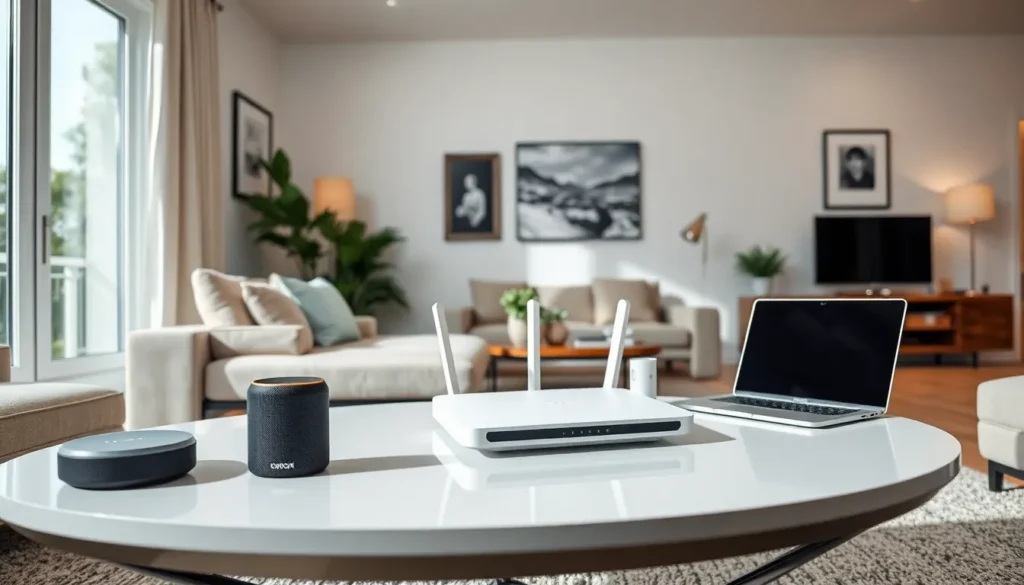
In a world where every gadget wants to connect to the internet, the home networking device market is booming faster than a cat video going viral. From routers that promise lightning-fast speeds to extenders that claim to reach every nook and cranny of your home, there’s no shortage of options. But with great power comes great responsibility—choosing the right device can feel like picking a favorite child.
As homes transform into smart tech havens, understanding the ins and outs of networking devices becomes essential. With the right gear, streaming that new series or video chatting with grandma can be seamless and lag-free. So buckle up as we dive into the fascinating world of home networking devices—where innovation meets a sprinkle of chaos and a dash of tech-savviness.
Overview of Home Networking Device Market
The home networking device market continues to expand rapidly. High-speed routers and range extenders represent just a fraction of the available options. Increased adoption of smart technology in homes drives demand for reliable networking solutions. Innovative products focus on enhancing connectivity and ensuring seamless streaming experiences.
According to recent market analyses, the global home networking market is expected to reach $24 billion by 2025. Growth results from heightened internet usage and the proliferation of connected devices. Many households rely on robust networking for smooth operation of smart TVs, gaming consoles, and IoT devices.
Market segmentation reveals distinct preferences among consumers. Routers dominate the market, accounting for approximately 55% of the total sales. Additionally, demand for mesh networking systems rises, providing extensive coverage in larger homes. The increasing complexity of home networks necessitates effective solutions that cater to multiple devices simultaneously.
Regionally, North America showcases strong market potential, propelled by advanced infrastructure and tech-savvy consumers. Europe follows closely, emphasizing security and privacy in networking solutions. Emerging markets also exhibit growth due to rising internet penetration and investment in smart home technologies.
Competition remains fierce among key players, including TP-Link, Netgear, and ASUS. Innovations in Wi-Fi standards, such as Wi-Fi 6, enhance performance capabilities while providing better energy efficiency. Investment in research and development ensures new features align with evolving consumer needs.
Overall, the home networking device market presents vast opportunities. As technology advances, households increasingly prioritize connectivity for their smart devices. Effective networking solutions play a crucial role in creating efficient, connected living environments.
Key Players in the Market
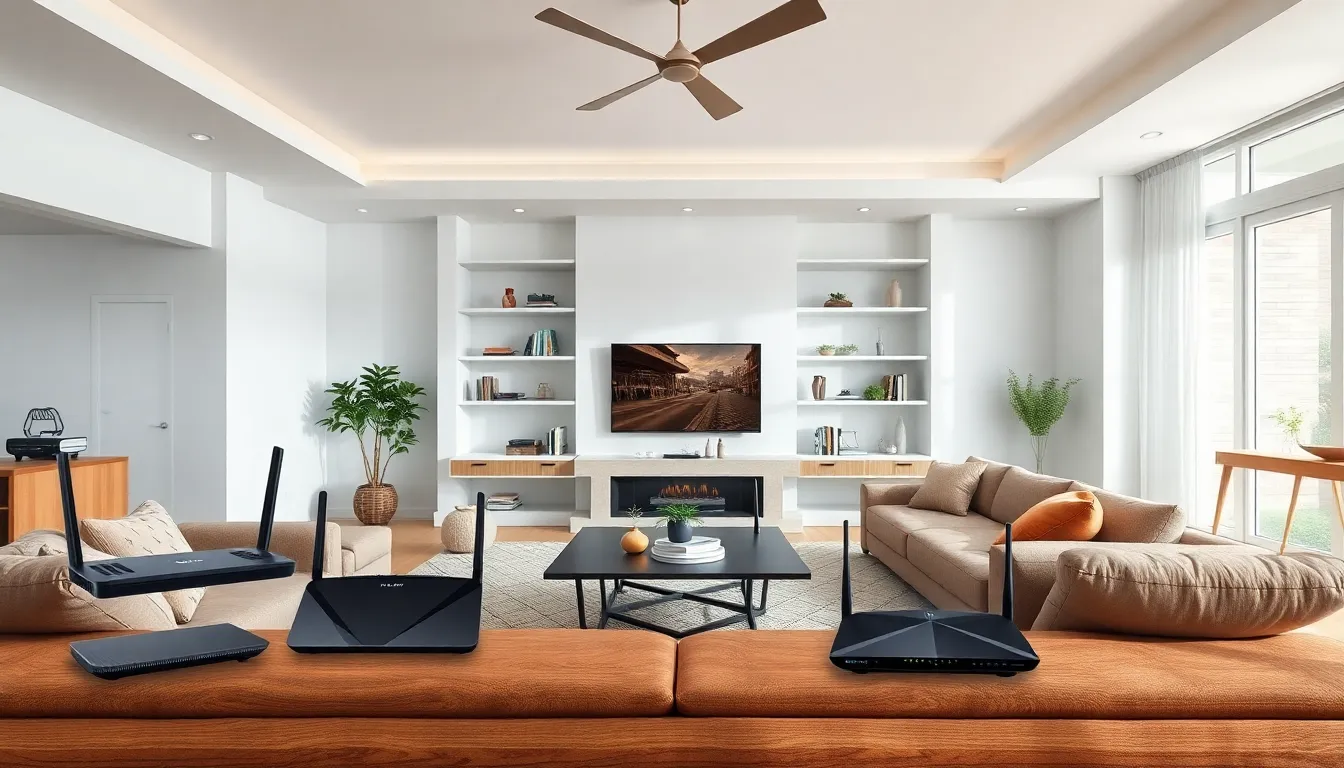
Home networking devices feature several prominent companies driving innovation and competition. Industry leaders consistently enhance product offerings to meet rising consumer demands.
Industry Leaders
TP-Link stands as a significant player, known for its affordable routers and range extenders. Netgear distinguishes itself through premium offerings, including advanced mesh systems. ASUS captures attention with high-performance solutions tailored for gamers. D-Link also contributes to the market with unique features focusing on home automation. Market shares reflect their dominance, especially with routers comprising approximately 55% of total sales. Innovations like Wi-Fi 6 improve speed and connectivity, a crucial aspect for many users.
Emerging Companies
Emerging companies like Eero focus on simplifying home networking, offering easy-to-install mesh systems. Google Nest Wi-Fi integrates smart home features, appealing to a tech-savvy demographic. Amplifi provides stylish networking solutions, aiming at design-conscious consumers. Other startups introduce specialized devices targeting niche markets, such as enhanced security or energy efficiency. These fresh entrants invigorate the market and encourage established players to innovate. As competition intensifies, the home networking landscape will continue evolving to accommodate diverse consumer needs.
Trends and Innovations
Home networking devices are evolving rapidly, reflecting trends in technology and consumer needs. Significant innovations focus on better integration and enhanced wireless technologies.
Smart Home Integration
Smart home integration has become essential in home networking. Many devices now offer compatibility with platforms like Amazon Alexa and Google Assistant, allowing seamless control over connected gadgets. Users can expect unified management of their smart lighting, thermostats, and security systems through a centralized app. Increased demand for automation solutions drives manufacturers to incorporate smart features, enhancing user convenience. Companies like TP-Link and Netgear prioritize interoperability to address the growing trend of diverse smart ecosystems.
Wireless Technologies
Wireless technologies significantly impact home networking evolution. The introduction of Wi-Fi 6 has redefined performance and efficiency standards, accommodating more devices without compromising speed. Increased bandwidth and lower latency enhance streaming, gaming, and video conferencing experiences for users. Additionally, mesh networking systems gain popularity due to their ability to eliminate dead zones in larger homes. Advanced technologies like MU-MIMO and beamforming further optimize signal distribution, ensuring consistent coverage throughout the residence. Providers continuously innovate to keep pace with the increasing demand for reliable and robust wireless solutions.
Challenges in the Home Networking Device Market
The home networking device market faces several challenges that impact its growth and consumer satisfaction.
Security Concerns
Security remains a primary issue for consumers. Many home networking devices lack adequate protection, making them vulnerable to cyberattacks. Recent studies indicate that 70% of smart home devices have security flaws, prompting concerns among users. Manufacturers must prioritize robust encryption and regular software updates to mitigate risks. Furthermore, integration with smart home platforms increases these devices’ exposure to potential breaches. As reliance on home automation grows, addressing security vulnerabilities is critical for consumer trust.
Consumer Adoption
Consumer adoption varies despite the surge in smart technology usage. Some users remain hesitant to upgrade their networking systems due to perceived complexity. In fact, 60% of consumers feel overwhelmed by available options and features. Misunderstanding the benefits of devices like mesh networks or Wi-Fi 6 can deter purchasing decisions. Education efforts must effectively communicate how these innovations enhance connectivity and performance. By simplifying the adoption process, manufacturers can encourage more households to embrace modern networking solutions.
Future Outlook of the Market
Growth in the home networking device market shows no signs of slowing, with projections indicating it will reach $24 billion by 2025. Increased internet usage and the expanding number of connected devices drive this surge. Routers make up about 55% of total sales, demonstrating their dominance in the market. Demand for mesh networking systems is on the rise, especially among larger households looking for extensive coverage.
Strong market dynamics characterize North America due to its infrastructure and tech-savvy consumers. Europe emphasizes security and privacy, highlighting differing regional priorities while striving for robust solutions. Competition among industry leaders, such as TP-Link, Netgear, and ASUS, is intense. Innovations in Wi-Fi technology like Wi-Fi 6 significantly enhance performance and energy efficiency across devices.
Furthermore, emerging companies like Eero and Google Nest Wi-Fi are simplifying home networking. Many devices now offer compatibility with smart home platforms like Amazon Alexa and Google Assistant, introducing convenience for users. The introduction of advanced technologies, including MU-MIMO and beamforming, optimizes signal distribution and ensures consistent coverage.
Challenges persist, particularly concerning security. Studies reveal that 70% of smart home devices carry security flaws, necessitating manufacturers to emphasize robust encryption and regular updates. Consumer adoption rates reflect a diverse landscape; 60% of users experience frustration due to overwhelming options. Education efforts about the advantages of new technologies, like mesh networks and Wi-Fi 6, are vital for simplifying user experiences and promoting upgrades.
As competition intensifies, the market is poised for further evolution. Innovations will continue to accommodate diverse consumer needs, emphasizing the importance of effective networking solutions in creating connected living environments.
The home networking device market is set for significant growth as technology continues to evolve. With smart homes becoming the norm consumers are increasingly seeking reliable networking solutions. The rise of mesh networks and advancements like Wi-Fi 6 are reshaping how households connect and interact with their devices.
As competition heats up among established brands and emerging players innovation will remain key. Addressing security concerns and simplifying consumer education will be crucial for manufacturers aiming to build trust and drive adoption. The future looks bright for the home networking market as it adapts to meet the demands of an increasingly connected world.