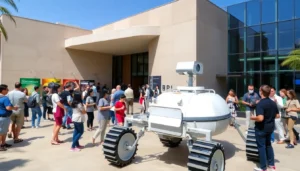

In a universe where the only constant is change, space and technology are the dynamic duo that keep pushing boundaries. Imagine a world where your smartphone could launch a rocket—okay, maybe not quite yet, but with each technological leap, we inch closer to that sci-fi reality. From satellite communications that help us binge-watch cat videos to rovers exploring the Martian surface, the marriage of space and technology is nothing short of spectacular.
As they say, necessity is the mother of invention, and in the vast cosmos, that necessity is as big as a black hole. With every innovation, we’re not just reaching for the stars; we’re redefining what’s possible. Buckle up as we dive into this cosmic adventure, where the wonders of space meet the marvels of technology, and find out how they’re shaping our future—one byte at a time.
Overview of Space and Technology
Space exploration relies heavily on technological advancements. Innovations in areas like rocket propulsion, satellite design, and communication systems push the boundaries of what humanity can achieve in the cosmos. The development of reusable rockets, exemplified by SpaceX’s Falcon 9, significantly reduces costs associated with space travel.
Artificial intelligence plays a crucial role in processing vast amounts of data collected from missions. It enhances decision-making in real time, allowing space agencies to analyze information quickly and efficiently. Instruments aboard telescopes, such as the James Webb Space Telescope, rely on cutting-edge technology to capture high-resolution images of distant galaxies and stars.
New materials also contribute to the advancement of space missions. Lightweight composites and durable alloys withstand the extreme conditions of space, ensuring the safety and effectiveness of spacecraft. Additionally, technology facilitates enhanced life-support systems that sustain astronauts during long-duration missions, like those planned for Mars.
The intersection of telecommunications and space has transformed global connectivity. Satellite networks provide internet access to remote regions, bridging the digital divide. Drones and robotics enable more efficient exploration of planetary surfaces, assisting in the search for extraterrestrial life.
Ground-based observatories and space missions frequently collaborate, sharing data and resources. Organizations often pool efforts to accelerate research and innovation, reflecting a trend towards international cooperation in space exploration. These endeavors emphasize the critical role of technology as an enabler, expanding humanity’s horizons while inspiring future generations to explore the universe.
Historical Developments
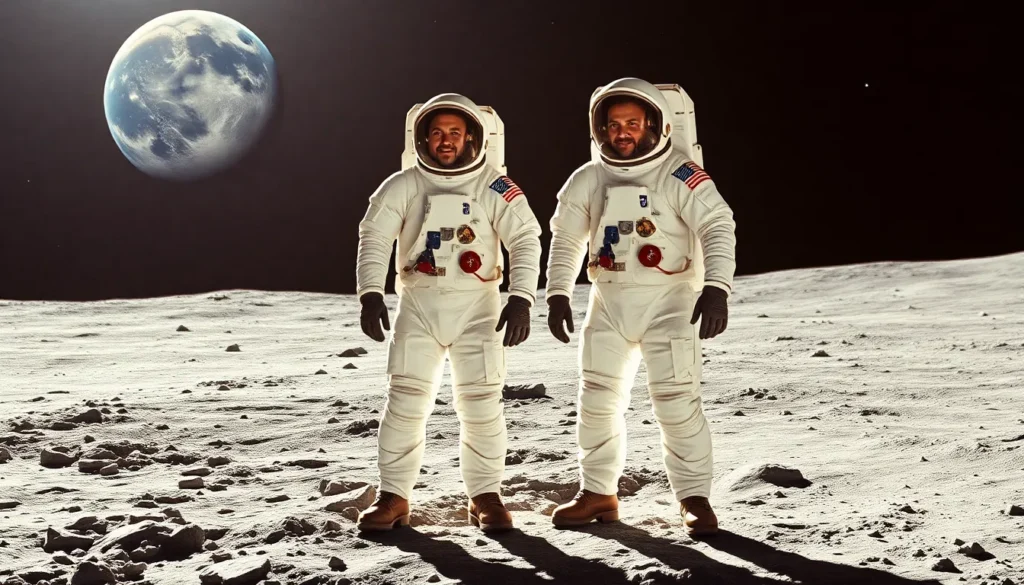
The history of space and technology reveals a remarkable journey of innovation and discovery. Early breakthroughs laid the groundwork for modern exploration and understanding of the universe.
Early Innovations
Significant advancements began with primitive rocketry in the early 20th century. In 1926, Robert H. Goddard launched the first liquid-fueled rocket, marking a critical turning point. The V-2 rocket, developed during World War II by Wernher von Braun, further demonstrated the potential for space travel. In 1957, the Soviet Union’s Sputnik 1 became the first artificial satellite, orbiting Earth and igniting the space race. These early innovations set a precedence for technological development in space exploration.
Milestones in Space Exploration
The 1960s witnessed pivotal milestones that changed humanity’s relationship with space. NASA’s Apollo 11 mission in 1969 achieved the first crewed landing on the Moon, showcasing human ingenuity and bravery. The launch of the Space Shuttle in 1981 enabled reusable spacecraft for various missions, including satellite deployment and maintenance. In 1998, the International Space Station began construction, serving as a symbol of international collaboration. The 21st century brought rovers, like Curiosity, enhancing exploration of Mars and increasing our understanding of other planets.
Current Trends in Space Technology
Innovations in space technology are shaping humanity’s exploration efforts. These advancements not only enhance our understanding of the universe but also improve global communication systems.
Satellites and Communication
New satellite technologies have revolutionized communication. Companies are deploying large constellations of small satellites to provide global internet coverage. For instance, SpaceX’s Starlink plans to launch thousands to ensure access even in remote areas. Enhanced satellite design has also increased data transmission speeds. High-throughput satellites enable more efficient communication, bridging gaps in connectivity. The integration of artificial intelligence into satellite operations optimizes resource management. Emerging software solutions allow real-time monitoring of satellite health and performance.
Space Missions and Discoveries
Recent space missions continue to unfold significant discoveries. NASA’s Perseverance rover is exploring Mars, analyzing samples for signs of ancient life. This mission employs advanced technology like autonomous navigation systems to enhance exploration efficiency. The James Webb Space Telescope has entered service, providing unprecedented views of deep space phenomena. Collaboration between national space agencies fuels ambitious projects, such as lunar exploration through NASA’s Artemis program. Mission-focused technologies increasingly assist in analyzing extraterrestrial environments. Enhanced life-support systems ensure astronaut safety on longer missions to distant bodies.
The Role of Private Companies
Private companies significantly shape the landscape of space technology, driving innovation and exploration. These organizations enhance capabilities in ways previously thought impossible.
Key Players in the Industry
SpaceX, Blue Origin, and Virgin Galactic are leading the charge in commercial space ventures. SpaceX’s reusable rocket technology reduces launch costs, making space more accessible. Blue Origin focuses on suborbital tourism and orbital missions, while Virgin Galactic concentrates on providing commercial spaceflights. Other key players like Rocket Lab and Astra expand launch options for smaller payloads. These companies foster competition that accelerates growth and efficiency in satellite development and space transportation.
Impact on Innovation
Innovation in the private sector complements government initiatives, expanding overall capabilities in space. Companies push boundaries, developing advanced propulsion systems and in-orbit manufacturing techniques. Collaborative agreements between private firms and national agencies expedite mission timelines and enhance technology transfer. Rapid prototyping and agile methodologies enable quicker responses to challenges, streamlining the development process. Examples of successful missions, such as SpaceX’s Crew Dragon and Rocket Lab’s Electron, illustrate the transformative impact of these innovations on global space operations.
Future Prospects
Future missions in space exploration promise to push the boundaries of current technology. Upcoming NASA missions target sample return from Mars and the lunar surface. The Artemis program aims for crewed lunar landings by 2025, establishing a sustainable human presence. Meanwhile, private companies such as SpaceX plan to facilitate crewed missions to Mars within the next decade. The blend of government and private sector collaboration accelerates innovation, leading to incredible advances in space exploration.
Emerging technologies continue to revolutionize the field. Advances in propulsion systems, like ion thrusters, offer increased efficiency for spacecraft traveling long distances. Quantum computing stands to enhance data processing capabilities for complex space missions. Robotics also evolves, with autonomous systems improving exploration efficiency on other planetary surfaces. Artificial intelligence plays a crucial role, optimizing resource management on missions. Overall, these technologies will drive the next wave of discoveries in space, paving the way for future exploration.
The synergy between space and technology is paving the way for unprecedented exploration and discovery. As innovations continue to emerge they’re not just enhancing our understanding of the universe but also redefining how humanity interacts with it. The role of private companies and collaborative efforts with national agencies is accelerating advancements that were once thought impossible.
Future missions hold the promise of groundbreaking achievements that will push the limits of technology and exploration. As humanity reaches for the stars the journey will inspire generations to come, highlighting the endless possibilities that lie beyond our planet. The relationship between space and technology is not just a tale of exploration; it’s a testament to human ingenuity and the quest for knowledge.