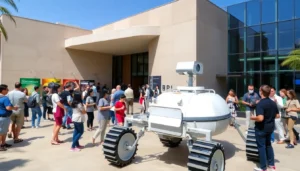

When you think of space exploration, you might picture astronauts floating in zero gravity or rovers zooming across Mars. But what if we told you that the benefits of these cosmic adventures reach far beyond the stars? In fact, one fascinating example shows how technology developed for space missions has transformed everyday life right here on Earth.
Overview of Space Exploration and Technology
Space exploration encompasses the study and exploration of outer space through various missions and technologies. Astronauts conduct research aboard the International Space Station (ISS), while rovers traverse planetary surfaces. Benefits of these missions extend beyond the cosmos, impacting daily life significantly.
Technologies developed for space exploration often find applications on Earth. Satellite technology offers communication improvements, enabling global connectivity and real-time weather forecasting. Medical advancements emerge from research conducted in microgravity, leading to innovative treatments and pharmaceuticals.
Environments in space present unique challenges that inspire ingenuity. Development of life-support systems fosters improvements in air and water purification technologies. Innovations in materials science result in more durable and efficient materials utilized in various industries.
Additionally, robotics advancements from space missions enhance automation in multiple fields. Robotics play crucial roles in agriculture, manufacturing, and disaster response, increasing efficiency and safety.
Investment in space technology stimulates economic growth and job creation. Many start-ups focus on satellite technology and Earth observation, contributing to local economies. Public and private collaborations drive further innovations, ensuring continuous improvement of technologies enhancing quality of life.
Focus on space exploration has the potential to inspire future generations. Incorporating science, technology, engineering, and mathematics (STEM) education becomes essential for cultivating interest. Inspiration from space missions encourages students to pursue careers in these critical fields.
Advancements in Medical Technology

Medical technology has significantly improved due to innovations from space exploration. These advancements enhance healthcare delivery and treatment options.
Telemedicine Development
Telemedicine emerged from the need to provide healthcare access remotely. The development of satellite communications, initially designed for space missions, enables real-time consultations between patients and doctors. This technology allows specialists to diagnose and treat patients in remote locations, improving patient outcomes. During crises, such as the COVID-19 pandemic, telemedicine became crucial, allowing seamless healthcare access without physical visits.
Imaging Techniques
Imaging techniques have transformed diagnostic medicine through technology adapted from space exploration. Advanced imaging devices, such as MRI and CT scanners, owe some functionalities to innovations derived from satellite technology. These imaging methods assist in early disease detection and treatment planning, increasing survival rates. High-resolution imaging enables doctors to observe detailed internal structures, leading to more accurate diagnoses.
Environmental Monitoring
Space exploration enables effective environmental monitoring through advanced technology. This technology plays a crucial role in understanding and managing Earth’s natural resources.
Satellite Earth Observation
Satellites equipped with advanced sensors provide valuable data about Earth’s surface. These satellites monitor deforestation, urban expansion, and water resources. They help scientists track changes in land use and the health of ecosystems. Organizations like NASA and the European Space Agency utilize satellite data for various missions. Their observations assist in disaster management and aid humanitarian responses. With this information, communities are better prepared for challenges caused by climate-related events.
Climate Change Insights
Space technology delivers critical insights into climate change, enhancing global awareness. Satellites assess atmospheric conditions and greenhouse gas concentrations. They measure temperature variations and monitor ice sheet melting in polar regions. Such data supports climate models that predict future changes. Governments and researchers use this information to formulate policies aimed at reducing environmental impact. Access to climate insights helps countries strategize for sustainability and resilience against climate-related threats.
Communication Innovations
Space exploration has significantly advanced communication technology, connecting people around the globe more effectively than ever.
Global Connectivity
Satellite technology revolutionized global connectivity, enabling instant communication across vast distances. Global positioning systems facilitate navigation and location-based services, enhancing travel and logistics efficiency. Moreover, remote areas benefit from access to communication networks, bridging gaps in education, healthcare, and business. The ability to communicate in real time supports humanitarian efforts during disasters, ensuring timely response and coordination. As a result, communities worldwide have experienced improvements in collaboration and emergency management.
Impact on Education
The influence of satellite technology extends to education, making learning resources accessible regardless of geographic location. Online platforms rely on satellite communications to provide educational materials and virtual classrooms, especially in underserved regions. Students can participate in interactive learning experiences with peers globally, enhancing cultural exchange and broadening perspectives. Remote learning opportunities, strengthened by this technology, foster skill development and lifelong learning. Consequently, education becomes more inclusive, preparing individuals for a competitive workforce.
Space exploration has proven to be a catalyst for transformative advancements that enhance everyday life. From improved medical technologies to enhanced communication systems, the benefits are far-reaching. The innovations born from the challenges of space missions not only address immediate needs but also lay the groundwork for future developments. As society continues to invest in and embrace these technologies, the positive impact on quality of life will only grow. The journey into space is not just about exploration; it’s about creating a better world on Earth.