
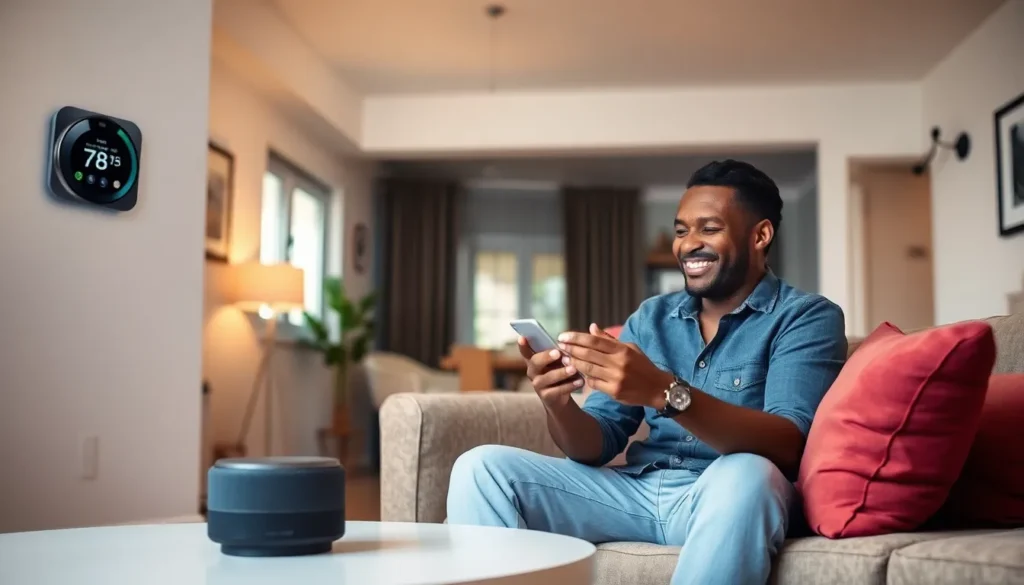
Imagine walking into your home and having everything respond to your every whim—lights dimming as you settle in for movie night and your coffee brewing just as you wake up. Welcome to the world of smart home networking, where technology isn’t just smart; it’s downright genius. With a few clicks, homes transform into orchestrated symphonies of convenience and comfort.
Overview of Smart Home Networking
Smart home networking connects various devices for streamlined operation. IoT (Internet of Things) plays a crucial role in this setup, enabling communication between appliances and systems. Connected devices like smart thermostats, lights, and security cameras enhance efficiency and comfort.
Home automation systems provide centralized control. Users manage connected devices through smartphones or voice assistants. Integration with platforms such as Amazon Alexa and Google Assistant is common, making it easier to issue commands or adjust settings.
Security measures are essential in smart home networking. Devices often include encryption and two-factor authentication to protect personal data. Regular software updates enhance security by addressing vulnerabilities.
Network infrastructure impacts overall performance. A robust Wi-Fi network or a dedicated smart home hub ensures reliable connectivity. Smart homes often require a stable connection to function optimally, avoiding interruptions during operation.
Energy management benefits from smart technology. Smart plugs and energy monitors track usage, helping homeowners make informed decisions. By analyzing data, they can reduce energy consumption and cut utility costs.
Interoperability among devices from different manufacturers enhances flexibility. Homeowners benefit from a wider range of choices when selecting devices that suit their needs. Standards such as Zigbee and Z-Wave facilitate compatibility and support seamless integration.
Smart home networking significantly transforms daily living. Increased convenience, enhanced security, and improved energy efficiency are just a few advantages. As technology continues to evolve, smart homes are set to become even more sophisticated and interactive.
Key Components of Smart Home Networks

Smart home networks rely on several key components that ensure seamless communication and control of connected devices. Understanding these components enhances the smart home experience.
Routers and Access Points
Routers serve as the backbone of smart home networks, directing data traffic between devices and the internet. Strong signals enable reliable connectivity throughout the home. Access points extend Wi-Fi coverage, alleviating dead zones. Ensuring routers can handle multiple connections prevents slowdowns as devices multiply. A dual-band router optimizes performance by separating 2.4 GHz and 5 GHz frequencies, supporting more devices effectively. Investing in a mesh networking system can further improve coverage, allowing for efficient data transmission in larger spaces.
Smart Devices
Smart devices include various appliances and systems that enhance home automation. Examples include smart thermostats which adjust temperatures automatically and smart lights that respond to voice commands. These devices communicate over Wi-Fi or through protocols like Zigbee and Z-Wave for interoperability. Additionally, security cameras and door sensors provide safety while integrating with central hubs or applications. Monitoring energy usage becomes easier with smart plugs, offering insights into consumption patterns. Device variety enhances flexibility, allowing tailored configurations for every homeowner’s needs.
Benefits of Smart Home Networking
Smart home networking offers various advantages, enhancing comfort and efficiency in daily living. From convenience to energy management, these benefits significantly improve how homes function.
Convenience and Automation
Smart home devices simplify daily tasks. Users control appliances and systems with a tap or voice command, allowing seamless interactions throughout the house. Scheduling capabilities enhance routines, ensuring lights brighten at dusk and the thermostat adjusts before arriving home. Custom scenes create the perfect atmosphere for any occasion, such as movie nights or dinner parties. Moreover, automation increases safety by enabling remote monitoring of security cameras and sensors. Homeowners enjoy peace of mind by receiving alerts on smartphone apps if unusual activity occurs. Overall, the convenience of smart home networking streamlines daily living and transforms routines into effortless experiences.
Energy Efficiency
Energy management benefits from smart home networking. Smart thermostats learn habits and adjust heating and cooling accordingly, optimizing energy consumption. Monitoring tools display real-time energy usage, empowering homeowners to make informed decisions. Smart plugs manage energy flow by scheduling devices, reducing unnecessary power drain. This proactive energy management leads to cost savings and lower bills. Additionally, integrating energy-efficient appliances further enhances efficiency, with many appliances automatically operating during off-peak hours to take advantage of lower energy rates. In summary, smart home technology enables significant reductions in energy waste, making homes more environmentally friendly while saving money.
Challenges and Considerations
Smart home networking presents both opportunities and obstacles. Users must navigate various challenges to fully benefit from the technology.
Security Risks
Security risks pose a significant concern in smart home networking. Connected devices can become targets for cyberattacks if not properly secured. Data encryption, two-factor authentication, and regular software updates play crucial roles in protecting personal information. Vulnerabilities in weak passwords can lead to unauthorized access, so users must implement strong, unique passwords for each device. Regular monitoring of devices for suspicious activity enhances overall security. Keeping firmware updated ensures protection against known exploits while still allowing the convenience of automation to shine through.
Compatibility Issues
Compatibility issues frequently arise when integrating smart devices from different manufacturers. Devices may not communicate effectively due to differing protocols or proprietary technologies. Even popular standards like Zigbee or Z-Wave do not guarantee seamless interaction. Buyers should investigate compatibility before purchasing new devices to ensure an integrated experience. Regularly checking for firmware updates can also help bridge compatibility gaps as manufacturers work to enhance interoperability among their devices. Ultimately, awareness of compatibility requirements can save users from frustration during setup and operation.
Future Trends in Smart Home Networking
Emerging technologies play a significant role in shaping the future of smart home networking. The growing adoption of 5G networks enhances connectivity, allowing devices to communicate at higher speeds with lower latency. IoT protocols are evolving to enable seamless integration between diverse device types, promoting a more cohesive smart ecosystem.
Artificial intelligence (AI) integration is another trend impacting smart home systems. AI-powered devices learn user behavior, providing personalized experiences and automating daily routines. Machine learning algorithms analyze data, ensuring systems adapt to changing preferences and energy consumption patterns.
Voice-controlled smart assistants continue to gain popularity, offering hands-free convenience. As natural language processing improves, user interactions with devices become more intuitive. This shift enables homeowners to control their environment with simple voice commands, further enhancing usability.
Data privacy and security remain focal points in smart home advancements. Devices are increasingly implementing advanced encryption techniques and multi-factor authentication methods. This approach protects personal information while fostering consumer trust in smart technology adoption.
Energy efficiency efforts are concurrently gaining momentum. Smart home technologies are integrating renewable energy solutions, such as solar panels and battery storage systems. These innovations help homeowners optimize energy usage, reduce costs, and contribute to environmental sustainability.
Interoperability among devices also marks a significant trend. Organizations are establishing universal standards and frameworks to improve compatibility across manufacturers. This development simplifies the integration process, allowing users to mix and match devices from various brands seamlessly.
Customization options are expanding, with homeowners able to design unique smart environments tailored to their needs. Configurable routines and settings empower users to create personalized scenarios, enhancing both convenience and enjoyment in everyday life.
Smart home networking is revolutionizing how people interact with their living spaces. With the ability to automate daily tasks and enhance security, homeowners can enjoy a more convenient and efficient lifestyle. As technology continues to evolve, the integration of AI and 5G networks will further enhance connectivity and personalization.
While the benefits are significant, attention to security and compatibility remains crucial. By prioritizing robust network infrastructure and staying informed about device compatibility, users can fully leverage the advantages of smart home technology. Embracing these innovations not only makes homes more comfortable but also contributes to energy efficiency and sustainability. The future of smart living is bright and full of possibilities.