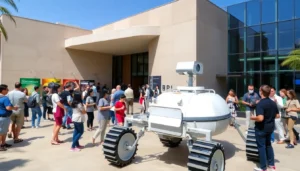

The space technology market is blasting off like a rocket, and it’s not just for astronauts anymore. With innovations popping up faster than a shooting star, this industry is transforming how we explore the cosmos and connect here on Earth. From satellite communication to space tourism, the opportunities are as vast as the universe itself.
Overview of Space Technology Market
The space technology market experiences significant expansion driven by advancements beyond traditional astronautics. Innovative developments in satellite technologies enhance global communication systems, improving connectivity around the world. Growth in the satellite communication sector contributes to a projected market value of $385 billion by 2028, reflecting robust demand for enhanced data transmission capabilities.
As private companies enter the arena, competition intensifies, fostering new ideas and technologies. Space tourism emerges as a valuable segment, attracting investments from various stakeholders. Industry leaders predict the commercial space tourism sector could reach $3 billion by 2027, underscoring the increasing public interest in space travel.
Collaborations among government agencies, private enterprises, and research institutions support progress in space exploration and technology. The partnerships enhance research initiatives, driving innovation and reducing costs associated with launching and operating space missions. Notably, initiatives like NASA’s Artemis Program aim to return humans to the Moon and establish a sustainable presence, paving the way for future exploration.
Emerging technologies such as reusable rockets and small satellites contribute to cost-effectiveness in space missions. These innovations lower the barrier to entry for new players in the market, facilitating a more dynamic environment. Data from various sources highlights that the small satellite market alone is projected to grow to $7.4 billion by 2025.
Focus on Earth observation technologies plays a crucial role in addressing climate change and natural disasters. Satellite imagery provides critical insights for disaster management, agriculture, and environmental monitoring. Market analysts emphasize that the increasingly complex demands for data analytics will steer future investment in space technology.
Key Trends Driving the Market

The space technology market experiences significant transformation, influenced by various trends. These trends reshape industries and enhance capabilities in space exploration and communication.
Innovative Spacecraft Development
Innovative developments in spacecraft are pivotal for expanding missions beyond Earth’s orbit. Companies focus on creating reusable vehicles to reduce costs and enhance efficiency. Developments in autonomous systems improve mission success rates and safety for human and robotic missions. Notably, SpaceX’s Starship aims for interplanetary travel, showcasing advancements in propulsion technology. Public-private partnerships accelerate innovation, as seen with NASA’s collaboration on the Artemis Program. These partnerships leverage resources and expertise to push boundaries in space exploration.
Advancements in Satellite Technology
Advancements in satellite technology play a significant role in the space technology market. With satellite communication systems evolving, global connectivity improves, facilitating better data transmission. The small satellite market expects substantial growth, projected to reach $7.4 billion by 2025. Each small satellite enhances the capabilities of Earth observation, climate monitoring, and disaster management. Enhanced imaging technologies provide critical data for various sectors, driving investment in satellite analytics. Increased private sector involvement fosters competitive solutions that offer innovative applications for emerging satellite technologies.
Major Players in the Space Technology Market
The space technology market thrives due to a mix of established companies and innovative startups. Key players contribute significantly to advancements and investment.
Leading Companies and Their Contributions
Leading companies like SpaceX, NASA, and Boeing significantly drive innovations in space technology. SpaceX focuses on reusable rocket technology, which lowers launch costs. NASA’s Artemis Program aims to return humans to the Moon, showcasing strong collaboration with private enterprises. Boeing’s experience in satellite manufacturing and space exploration remains vital for both government and commercial missions. Each organization’s strategic goals align with enhancing global communication and exploration capabilities, establishing a competitive edge in the expanding market.
Emerging Startups and Disruptive Innovations
Emerging startups like Rocket Lab and Planet Labs introduce disruptive innovations to the space technology landscape. Rocket Lab specializes in small satellite launches, making space access more affordable. Planet Labs focuses on providing high-frequency satellite imagery, which benefits various sectors including agriculture and environmental monitoring. As these companies leverage new technologies, they contribute to the projected market growth, expected to reach $385 billion by 2028. Their agility and focus on niche markets allow them to capitalize on emerging opportunities, positioning them as vital players in the evolving ecosystem of space technology.
Challenges Facing the Space Technology Market
The space technology market faces several significant challenges that can impact its growth and innovation. Notably, regulatory hurdles and technical limitations pose barriers that companies must navigate.
Regulatory Hurdles
Regulatory hurdles impede rapid advancements in space technology. Governments enforce strict guidelines concerning launches, satellite operations, and the use of space resources. These regulations can delay project timelines and increase operational costs for companies. Current international frameworks often lack clarity, creating confusion for startups and established firms alike. As the market projected to reach $385 billion by 2028, addressing these legal complexities becomes crucial for fostering an environment conducive to innovation and investment.
Technical Limitations
Technical limitations challenge the efficiency and cost-effectiveness of space missions. Current satellite technology faces constraints in data transmission capabilities and power efficiency. Launching small satellites, while cost-effective, may not always meet the expansive requirements of large-scale operations. Existing rockets have limits on payload capacity, which restricts mission scalability. As emerging technologies strive for progress, overcoming these technical barriers will significantly contribute to achieving market potential, particularly in areas like Earth observation and space tourism.
Future Outlook of the Space Technology Market
The space technology market is poised for remarkable growth, with transformative developments shaping its trajectory. Innovations and strategic investments emerge as key drivers in this evolving sector.
Growth Projections
Market estimates place the space technology sector’s value at $385 billion by 2028. Heightened demand for satellite technologies propels this growth, particularly in the communication and Earth observation areas. Private companies amplify competition, fostering advancements in space tourism, expected to reach $3 billion by 2027. Significant growth in the small satellite market is anticipated, projected to hit $7.4 billion by 2025. These figures underline how advancements in technology are catalyzing expansion across various segments of the market.
Potential Opportunities
Emerging fields, such as space tourism and Earth observation, present vast opportunities. Companies can capitalize on the increasing interest in space travel, targeting affluent customers eager for unique experiences. Enhanced satellite imagery unlocks insights for sectors focused on climate change and disaster management. Collaborative projects involving government and private enterprise, exemplified by NASA’s Artemis Program, facilitate innovations in space exploration. Additionally, advancements in reusable rocket technologies promise to further reduce mission costs, making space more accessible. The combination of these factors positions the space technology market for significant opportunities in the coming years.
The space technology market stands at the brink of unprecedented growth. With advancements in satellite communication and the burgeoning field of space tourism, opportunities abound for both established companies and innovative startups. As collaborations between public and private sectors continue to thrive, the potential for groundbreaking discoveries and enhanced global connectivity increases.
Despite challenges like regulatory hurdles and technical limitations, the industry’s resilience and commitment to innovation pave the way for a bright future. The anticipated rise in demand for satellite technologies and data analytics will further solidify this market’s significance. As it evolves, stakeholders must stay agile and responsive to capitalize on the transformative changes ahead.