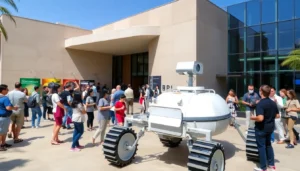
In the grand cosmic playground, Earth is just one of many kids on the block. As humanity’s curiosity rockets into the great unknown, interplanetary missions are the ultimate space road trips. Forget about traffic jams and gas prices; these journeys promise breathtaking views of alien landscapes and the thrill of discovering what lies beyond our blue marble.
Overview of Interplanetary Missions
Interplanetary missions encompass a range of space explorations targeting planets beyond Earth. Various space agencies, such as NASA and ESA, have launched these missions, aiming to study celestial bodies like Mars, Venus, and Jupiter. Each mission utilizes advanced technology, providing insights that enhance humanity’s understanding of the solar system.
Data collected from interplanetary missions enables scientists to analyze the composition of other planets. For instance, Mars rovers like Perseverance and Curiosity have uncovered evidence of past water and organic molecules. Each discovery adds to the growing knowledge about the potential for life beyond Earth.
Instrumentation varies across missions, designed to meet specific research goals. Spectrometers analyze mineral composition while cameras capture high-resolution images of the landscape. These tools help researchers understand planetary atmospheres and surface conditions.
A variety of objectives drive interplanetary missions. Goals include studying geological features, searching for signs of life, and assessing the potential for future human colonization. Each objective contributes to long-term plans for deeper space exploration, including crewed missions to Mars.
Viking 1, launched in 1975, marked America’s first successful landing on Mars and set the stage for subsequent missions. New missions continue to build on this legacy, enriching the narrative of space exploration.
Interplanetary missions represent a key step in expanding humanity’s reach into the universe. As technology advances, these missions will likely become more ambitious, shaping our understanding of the cosmos.
Historical Milestones in Interplanetary Exploration
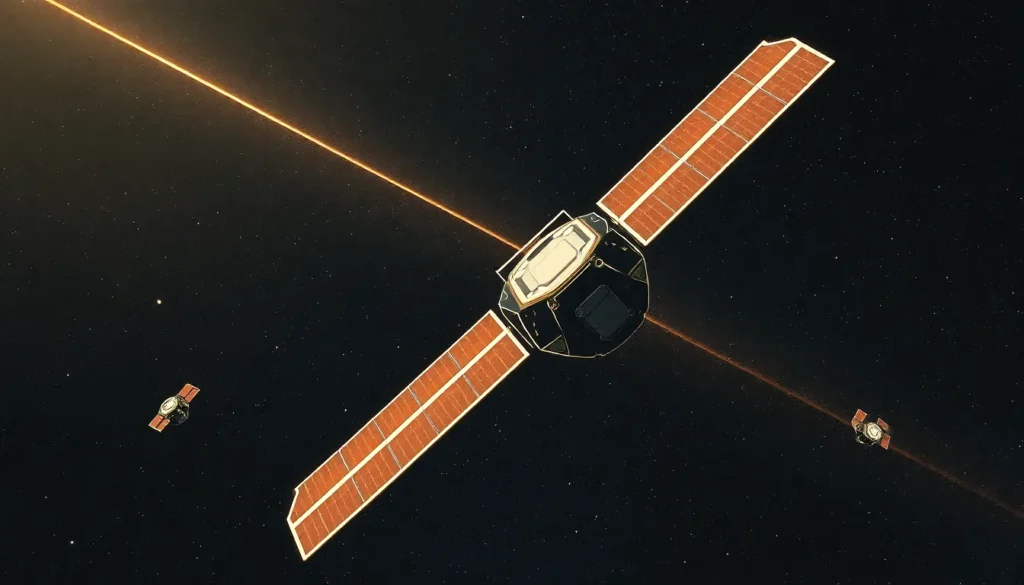
Interplanetary exploration has achieved remarkable milestones through various pioneering missions. These missions laid the groundwork for our understanding of the solar system and guided future endeavors.
Pioneer Missions
Pioneer 10 and 11 represented crucial steps in the exploration of the outer planets. Launched in the early 1970s, Pioneer 10 became the first spacecraft to travel through the asteroid belt and reach Jupiter in 1973. It transmitted detailed images of the planet and its moons back to Earth. Following that, Pioneer 11 flew past Saturn in 1979, capturing essential data on its rings and atmosphere. Both missions provided unprecedented insights into planetary science and inspired subsequent missions, demonstrating the feasibility of interplanetary travel.
Voyager Missions
Voyager 1 and Voyager 2 expanded humanity’s view of the solar system beyond the outer planets. Launched in 1977, they conducted close-up observations of Jupiter, Saturn, Uranus, and Neptune. Voyager 1 made history by becoming the first human-made object to enter interstellar space in 2012, sending back valuable data, including details about the heliosphere. Voyager 2 followed suit by completing the first and only flybys of Uranus and Neptune. The missions have served as ambassadors of science, carrying the Golden Record that contains sounds and images from Earth, representing humanity to potential extraterrestrial civilizations.
Notable Recent Interplanetary Missions
Recent interplanetary missions shed light on our solar system, revealing complexities and offering insights into the potential for life beyond Earth. These endeavors exemplify humanity’s quest for knowledge and exploration.
Mars Rovers
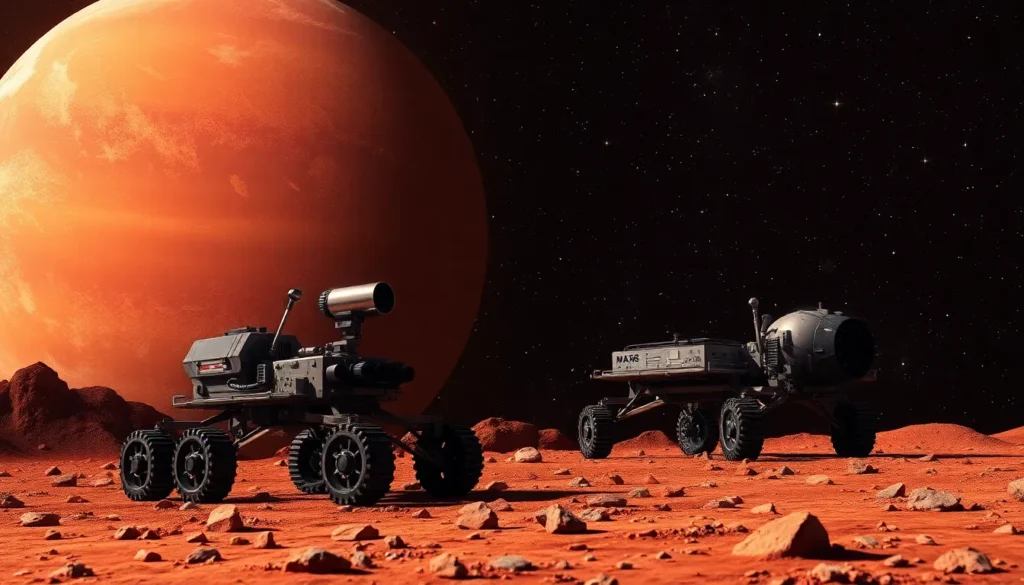
Mars rovers play a pivotal role in uncovering the mysteries of the red planet. Perseverance, deployed in February 2021, focuses on searching for signs of ancient life while collecting soil samples. Curiosity, active since 2012, continues to analyze the planet’s climate and geology. Both rovers use sophisticated instrumentation, including laser spectrometers and high-resolution cameras, to perform in-depth analyses of rock formations and atmospheric conditions. These missions yield valuable data about Mars’ past environments, enhancing our understanding of planetary evolution and the possibility of past habitability.
Missions to the Outer Planets
Missions to the outer planets significantly advance our knowledge of the solar system. NASA’s Juno spacecraft, launched in 2011, studies Jupiter’s atmosphere and magnetic field, uncovering secrets about its formation and evolution. Meanwhile, the ESA’s Jupiter Icy Moons Explorer (JUICE), set for launch in 2023, aims to explore Jupiter’s moons, particularly Europa, Ganymede, and Callisto, assessing their potential for hosting life. New findings and high-resolution images from these missions enhance existing knowledge and inspire future explorations of these distant worlds. Each mission contributes to a broader understanding of planetary systems and the possibilities they hold.
Future Prospects for Interplanetary Missions
Interplanetary missions will continue to grow in scope and complexity, promising exciting advancements in space exploration.
Upcoming Missions
NASA plans to launch the Artemis program, focusing on lunar exploration, which serves as a stepping stone for future Mars missions. ESA’s Mars Sample Return mission aims to collect soil samples, aiming for return to Earth, potentially providing invaluable information about Mars’ past. Additionally, the Europa Clipper mission intends to analyze the icy moon of Jupiter, investigating its potential habitability. SpaceX’s Starship is also gearing up for crewed missions to Mars, emphasizing private-sector involvement in space exploration. Each of these upcoming missions aims to expand humanity’s understanding of the solar system and lay the groundwork for sustained presence on other celestial bodies.
Technological Innovations
Innovations in technology are pivotal for the success of future interplanetary missions. Advanced propulsion systems, such as ion thrusters, enable faster travel to distant destinations, reducing mission durations significantly. Developments in autonomous navigation allow spacecraft to make real-time decisions, enhancing safety during missions. Furthermore, miniaturized scientific instruments facilitate detailed analyses of planetary environments while conserving space and weight on board. Collaborative efforts between international space agencies foster knowledge sharing, driving advancements in mission capabilities. Innovations in communication technology ensure real-time data transmission, promoting immediate insights into findings from other planets. Each of these technological advancements amplifies the potential for successful and groundbreaking missions beyond Earth.
Interplanetary missions represent humanity’s bold leap into the cosmos. Each mission unfolds new chapters in our understanding of the solar system and ignites curiosity about life beyond Earth. As technology evolves and collaboration among space agencies strengthens, the potential for groundbreaking discoveries expands.
The excitement surrounding upcoming missions underscores the commitment to exploring our celestial neighbors. From Mars to the icy moons of Jupiter, these endeavors pave the way for future exploration and even potential colonization. The journey into the unknown continues to inspire generations, reminding us that the universe is vast and full of possibilities waiting to be uncovered.