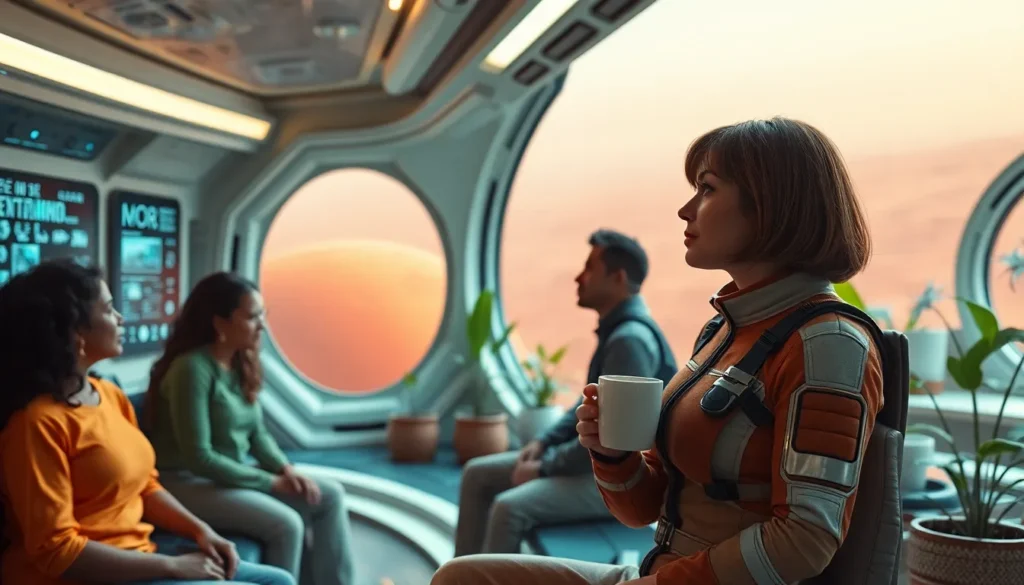
As humanity sets its sights on the stars, the dream of living in advanced space habitats is no longer just a sci-fi fantasy. Imagine sipping your morning coffee while gazing at Earth from a cozy pod orbiting Mars. Sounds like a scene from a blockbuster movie, right? But these futuristic homes are becoming a reality, blending cutting-edge technology with the comforts of home.
Overview Of Advanced Space Habitats
Advanced space habitats represent a significant evolution in human living environments beyond Earth. These structures integrate cutting-edge technology to support long-term human life in extraterrestrial settings. Life aboard these habitats includes daily activities such as working, eating, and socializing in comfort and safety.
Microgravity environments present unique challenges. Design adaptations ensure stability and functionality in reduced gravity. Advanced materials often feature insulation, radiation protection, and structural integrity, crucial for space. Sustainable living mechanisms, like water recycling and air purification systems, contribute to self-sufficiency in habitats.
Technological innovation plays a central role. Smart home systems control lighting, temperature, and resource management, enhancing livability. Virtual reality and augmented reality platforms provide entertainment and training experiences. The integration of biophilic design with natural elements leads to improved psychological well-being for inhabitants.
Research missions contribute valuable insights. Experiments on the International Space Station inform habitat design and enhance crew health. Data gathered aids in the development of greenhouses for food production, critical for extended missions. Collaborative projects, such as the Lunar Gateway, envision sustainable human presence on the Moon and Mars.
Community and social dynamics shape life in advanced habitats. Spaces promote interaction among inhabitants, fostering teamwork and collaboration. Design aspects include communal areas for recreation and leisure, vital for mental health. As humanity explores deeper into space, these habitats will create a foundation for future colonization efforts.
Key Features Of Advanced Space Habitats

Advanced space habitats integrate various features designed to support human life beyond Earth effectively. These environments prioritize safety, comfort, and sustainability, creating a new standard for living in space.
Life Support Systems
Life support systems are vital for sustaining crew members in space. These systems recycle water and air, ensuring a constant supply of breathable oxygen and potable water. Advanced filtration processes remove contaminants, while efficient systems manage waste. Monitoring these life support metrics allows for real-time adjustments. Additionally, integration with smart technology enhances resource efficiency, contributing to sustainable living. Robust life support systems claim success in extending mission durations and improving overall crew health.
Radiation Protection
Radiation protection remains a critical consideration for habitat design. Space habitats utilize advanced materials that shield inhabitants from harmful cosmic radiation and solar particles. Strategic placement of these materials enhances safety during long missions. Developers increasingly explore radiation-resistant composites, optimizing structural integrity. Innovative designs, such as incorporating thick walls and protective layers, mitigate risks effectively. Continuous research and testing demonstrate the efficacy of these protections, allowing long-term habitation of environments like Mars and the Moon.
Design Innovations In Advanced Space Habitats
Advanced space habitats feature cutting-edge designs that support human life in extraterrestrial environments. Innovations in modular construction and sustainable materials play key roles in this evolution.
Modular Design
Modular design enables flexibility and adaptability in space habitats. Standardized units can be assembled on-site, facilitating easy expansion or reconfiguration. Each module serves specific purposes, such as living quarters, laboratories, or agricultural areas. This approach enhances habitat functionality while allowing for efficient transportation. Planning integrates redundancy into crucial systems, ensuring continued operation during failures. Assembly in microgravity requires innovative techniques to maintain structural integrity during construction. Overall, modularity promotes scalability as missions evolve.
Sustainable Materials
Sustainable materials contribute significantly to the longevity of advanced space habitats. These materials optimize energy consumption while providing insulation and shielding from radiation. For instance, advanced composites minimize weight without sacrificing strength. Bio-based materials, such as mycelium, are being explored for their environmental benefits. Each choice aligns with recycling and reuse to limit waste and reduce the need for resupply missions. Innovations in 3D printing also allow the creation of habitat components using local resources, enhancing self-sufficiency. Ultimately, these sustainable choices support long-term human presence in space.
Applications Of Advanced Space Habitats
Advanced space habitats serve various crucial functions, enabling humans to thrive beyond Earth. Each application supports critical missions and promotes sustainable living in extraterrestrial environments.
Long-Term Missions
Long-term missions to Mars and the Moon rely on advanced space habitats for extended human stays. Enhanced life support systems ensure that crew members receive essential resources, including oxygen and water. These habitats facilitate daily activities by providing comfortable spaces for work and socialization. Research indicates that maintaining psychological well-being through communal areas and recreational opportunities is vital during prolonged missions. Sustainability measures like water recycling and air purification help habitats operate independently, supporting life over months or years. Ultimately, advanced space habitats make it feasible for humanity to explore farther into the solar system.
Research and Development
Research and development play a significant role in advancing space habitat technology. These environments serve as testbeds for innovative life support systems and architectural designs. Scientists and engineers utilize findings from the International Space Station to enhance habitat functionality and crew health. Development efforts focus on creating advanced materials that provide radiation protection and structural integrity. New technologies improve resource management and energy efficiency, contributing to sustainability. Innovative strategies such as modular construction offer flexibility in adapting habitats for various purposes. Thus, advanced space habitats facilitate critical research that supports future space exploration and habitation.
Challenges Facing Advanced Space Habitats
Advanced space habitats face numerous challenges that must be addressed for successful long-term human occupation. These challenges encompass various technical and human factors.
Technical Limitations
Advanced space habitats encounter several technical limitations. Life support systems require constant monitoring to ensure efficiency, as any malfunction could jeopardize crew safety. Moreover, the materials used for construction must withstand extreme temperatures and radiation, necessitating ongoing research into more advanced composites. Spacecraft propulsion technology influences resupply missions, impacting habitat sustainability. Innovative energy solutions are essential; reliance on solar panels may not suffice during long periods without sunlight. Smart technologies must integrate seamlessly into habitat systems, enhancing user experience while reducing energy consumption. Continuous testing in real-world scenarios, such as aboard the International Space Station, informs improvements in these systems.
Human Factors
Human factors significantly influence the success of advanced space habitats. Mental health is a major concern; long-duration missions can lead to feelings of isolation and anxiety among crew members. Designing communal spaces fosters interaction, which is crucial for maintaining psychological well-being. Crew dynamics impact efficiency and cooperation; establishing effective communication channels ensures smooth operations. Nutritional balance also plays a role in physical and mental health, requiring dietary planning that accommodates various preferences and needs. Additionally, accommodating diverse cultures and backgrounds within a limited space requires thoughtful design to promote inclusiveness. Overall, addressing these human factors enhances crew functionality and resilience during extended missions.
Advanced space habitats mark a transformative step in humanity’s quest to inhabit extraterrestrial environments. By integrating cutting-edge technology with sustainable living practices, these habitats not only ensure safety and comfort but also promote psychological well-being among inhabitants.
As research continues to evolve, the lessons learned from current missions will shape the future of space living. The collaborative efforts in design and technology will pave the way for a new era of exploration and colonization, making long-term human presence on the Moon and Mars a tangible reality.
With each innovation, humanity moves closer to a future where living among the stars is not just a dream but a sustainable lifestyle.