Imagine zipping around the cosmos like it’s just another Tuesday commute. The future of space travel technology promises to turn that dream into reality, and it’s not as far-fetched as it sounds. With innovations popping up faster than a caffeinated astronaut, humanity’s next giant leap might just involve hopping on a space bus to Mars or ordering a cosmic ride-share to the Moon.
From warp drives to space elevators, the possibilities are endless and downright thrilling. As engineers and scientists push the boundaries of what’s possible, they’re not just reaching for the stars—they’re planning to take us along for the ride. Buckle up, because the age of interstellar travel is just around the corner, and it’s about to get a whole lot more exciting.
Future Space Travel Technology Overview
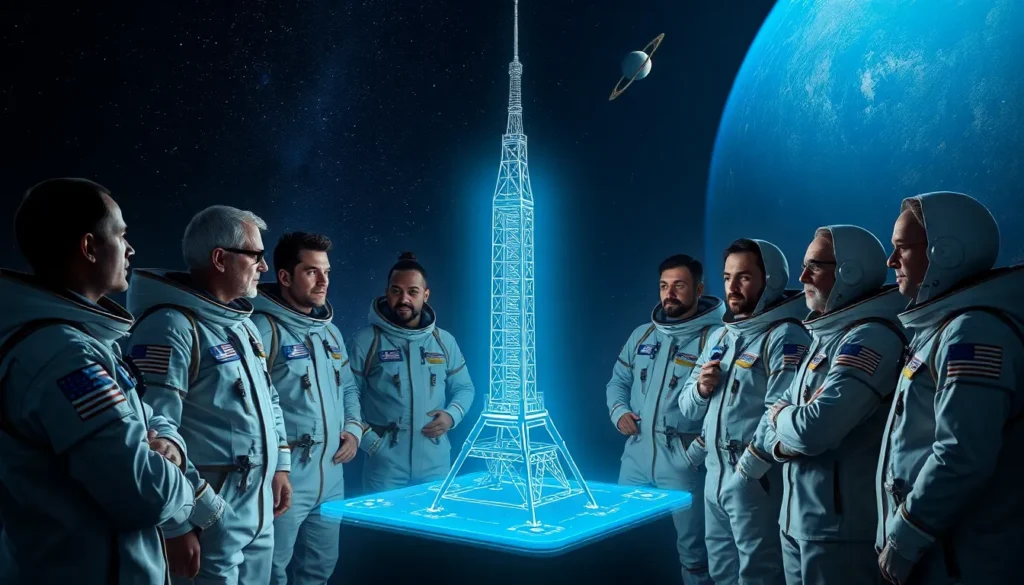
Advancements in space travel technology stand at the forefront of human innovation. Warp drives represent one of the most promising technologies, enabling faster-than-light travel by manipulating space-time. Space elevators offer another exciting possibility, providing a cable-based system for transporting cargo and passengers from Earth directly to orbit.
Robotic spacecraft are becoming essential players in future explorations. These vessels can gather data on distant planets and moons without human presence, ensuring safety while enhancing knowledge. Additionally, reusable rockets significantly reduce the cost of space travel by allowing multiple launches with the same hardware.
Research into propulsion systems continues to advance. Ion thrusters, for instance, provide efficient long-duration thrust for deep space missions. Solar sails harness sunlight for movement, offering the potential for continuous acceleration in the vacuum of space.
Life support systems also evolve to accommodate long-term human presence in space. Closed-loop systems recycle air and water, minimizing resource consumption during extended missions. This development is crucial for future colonization efforts on planets like Mars.
Plans for lunar bases utilize the Moon as a staging ground for deeper space exploration. Establishing a permanent presence enhances capabilities for missions to asteroids or other planets. These bases could also facilitate mining operations, providing necessary resources for interstellar travel.
Moreover, innovations in artificial intelligence streamline spacecraft operations. Autonomous systems can manage navigation and maintenance tasks, allowing crew members to focus on scientific research. Enhanced communication satellites will improve connectivity between Earth and spacecraft, further supporting missions.
As research progresses, these technologies pave the way for an exciting era of space exploration, expanding humanity’s reach beyond Earth.
Current Innovations in Space Travel
Innovations in space travel technology showcase humanity’s progress toward interstellar movement. Key advancements highlight efficiency and sustainability in this new era.
Reusable Rockets
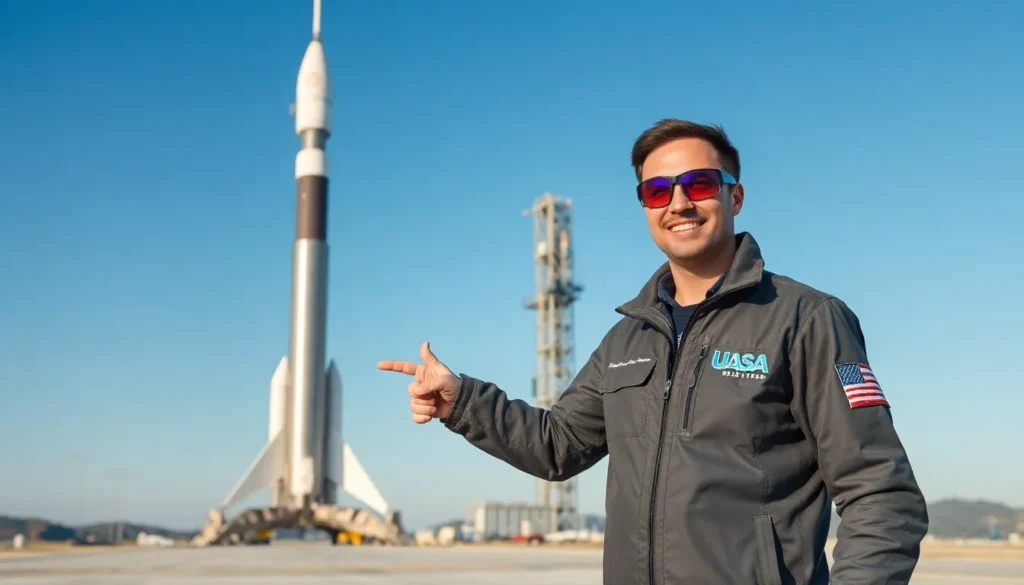
Reusable rockets enhance cost-effectiveness in space missions. SpaceX pioneered this technology with the Falcon 9, achieving successful landings after launches. Each reused rocket saves millions in operational expenses. Companies like Blue Origin are also developing their own reusable systems, further reducing barriers to access space. These advancements allow for more frequent launches, opening opportunities for research and exploration. Sustainable practices in rocket manufacturing continue to emerge, with a focus on minimizing waste and environmental impact.
Advanced Propulsion Systems
Advanced propulsion systems play a critical role in deep space exploration. Ion thrusters, utilized by the Dawn spacecraft, offer higher efficiency than traditional chemical engines. Solar sails, which harness sunlight for propulsion, present a novel approach for long journeys. These technologies reduce fuel dependency, allowing spacecraft to travel further with lower mass. Developing nuclear thermal propulsion could lead to even faster travel times within the solar system. Enhanced propulsion systems contribute to the feasibility of crewed missions to Mars and beyond, reshaping the future of human spaceflight.
The Role of Artificial Intelligence
Artificial intelligence (AI) plays a pivotal role in enhancing future space travel technologies. AI systems optimize navigation by processing vast amounts of data in real time. Automation ensures spacecraft can perform complex maneuvers with precision, reducing risks associated with human error.
Robotic spacecraft rely on AI for efficient data collection and analysis. These autonomous systems operate in environments hazardous to human life, enabling exploration of distant planets and moons. Machine learning algorithms help refine mission parameters, improving resource management during long missions.
AI enhances communication, facilitating seamless interaction between astronauts and Earth control centers. Natural language processing systems allow for efficient dialogue, reducing misunderstandings during critical operations. Advanced algorithms analyze signals and manage data, ensuring high-priority information reaches astronauts promptly.
Surveillance systems in spacecraft utilize AI to monitor environmental conditions. Predictive analytics assess potential issues, providing alerts before they escalate. This capability contributes to enhanced safety and longevity of missions.
AI contributes to the development of life support systems. Closed-loop systems leverage AI to continually assess and recycle essential resources like air and water. By optimizing these processes, astronauts can rely on sustainable living conditions for extended periods.
Autonomous decision-making frameworks enhance mission efficiency. As AI technology continues to evolve, it streamlines operations, allowing crews to concentrate on exploration and research. Continuous improvements in AI algorithms drive innovation, paving the way for advanced space missions and deeper exploration beyond our solar system.
The integration of AI in space travel not only increases operational effectiveness but also opens new avenues for scientific discovery, making it an indispensable component of future exploration efforts.
Space Habitats for Long-Duration Missions
Space habitats are essential for supporting human life during extended missions. These structures must provide a safe environment, ensuring air and water recycling, temperature control, and radiation protection. Closed-loop life support systems play a crucial role in maintaining a livable atmosphere. Such systems enable the recycling of water and oxygen, enhancing sustainability during long-duration trips.
Innovative designs, like the International Space Station (ISS), serve as a model for future habitats. They incorporate modular elements that can expand or adapt as needed. Structures like these will help astronauts thrive during missions to Mars and beyond. Research into materials that resist radiation and can endure harsh conditions is ongoing, with some options including carbon composites and specialized alloys.
Artificial gravity is another area of interest in habitat design. Generating gravity could counteract the adverse effects of prolonged weightlessness on human health. Concepts such as rotating habitats might provide a solution, simulating gravity through centrifugal force.
Bioregenerative life support systems are gaining attention as well. These systems utilize plants and microorganisms to create food, oxygen, and habitats. By integrating agriculture into habitats, long missions can become more self-sufficient.
Recent developments in habitat technology include inflatable modules. These structures are lightweight and compact, allowing for easy transportation and rapid deployment on extraterrestrial surfaces. Future lunar bases may utilize inflatable habitats to support exploration and research.
Ultimately, the evolution of space habitats requires collaboration across disciplines. Scientists, engineers, and architects must work together to ensure safe, functional environments for explorers. As technology progresses, these habitats will play a vital role in humanity’s journey toward deeper space exploration.
The Impact of Space Travel on Society
Space travel technologies influence various aspects of society. Economic opportunities expand as businesses invest in space exploration and tourism. Growth in the aerospace sector leads to job creation across engineering, manufacturing, and research industries.
Humanity experiences cultural shifts through new perspectives that space travel offers. Exposure to the vastness of the universe fosters a sense of unity and interconnectedness among people on Earth. Educational initiatives arise, promoting STEM fields and inspiring future generations to pursue careers in space-related fields.
Scientific advancements from space exploration benefit society beyond just travel. Innovations in materials science and technology emerge as researchers develop solutions for extreme environments. Health research, including studies on microgravity’s effects on the human body, informs medical practices on Earth.
Environmental awareness increases as people recognize Earth’s fragility when viewed from space. The “pale blue dot” effect inspires movements aimed at protecting the planet. Sustainable technologies developed for space missions contribute to cleaner energy and resource management on Earth.
Exploration endeavors are more than technological triumphs; they also raise ethical questions. Debates on space colonization and resource utilization spark discussions about governance and jurisdiction in outer space. Public engagement in these conversations shapes policies that may govern future space activities.
Collaboration among nations plays a pivotal role in shaping a future for space exploration. International partnerships foster the sharing of knowledge and resources, promoting peace and cooperation. Such collaborations reflect a collective human ambition to explore beyond Earth’s boundaries.
Ultimately, society’s response to advances in space travel technology will shape the trajectory of future exploration. Societal values, ethical considerations, and economic factors intertwine with technological developments. Strategies that prioritize sustainability and global cooperation will guide humanity’s journey into the cosmos.
The future of space travel technology is bright and full of promise. As innovations continue to emerge, humanity stands on the brink of a new era in exploration. The integration of advanced propulsion systems and artificial intelligence will redefine how people approach interstellar journeys.
With a focus on sustainability and efficiency, upcoming technologies will not only facilitate travel to distant planets but also enhance life support systems for extended missions. As society embraces these advancements, the potential for economic growth and international collaboration will rise.
The journey into the cosmos is just beginning, and the possibilities are limitless. It’s an exciting time for space enthusiasts and scientists alike as they prepare for the adventures that lie ahead.