When it comes to watching videos on an iPhone, the debate between 4K and HD is as heated as a summer day in the Sahara. With dazzling displays and pixel-packed resolutions, it’s easy to get lost in the numbers. But is all that extra resolution really worth it, or is HD still the trusty steed of the smartphone world?
Overview of 4K and HD
The comparison between 4K and HD reveals significant differences in video quality and viewing experiences on iPhones. Both options offer distinct characteristics worth considering.
Definition of 4K
4K resolution, also known as Ultra High Definition (UHD), provides a pixel count of 3,840 x 2,160. This results in four times the resolution of Full HD, ensuring enhanced detail and clarity. Viewers enjoy sharper images with better color accuracy, beneficial for large screens or close viewing distances. Filmmakers and content creators favor 4K for its high-quality output, enabling stunning visuals for streaming services and video production. Devices showcasing 4K content often require more storage and processing power, making it vital to assess compatibility with the iPhone.
Definition of HD
HD, or High Definition, typically refers to resolutions of 1,920 x 1,080. This format offers a clear and satisfactory viewing experience, suitable for smaller screens or regular usage. While it lacks the intricate detail of 4K, HD remains popular due to its widespread availability and compatibility with numerous devices. The lower pixel count means less storage consumption, making it easier to manage files on iPhones. Streaming platforms often provide content in HD, catering to users who prioritize accessibility over ultra-high resolution.
Comparing Visual Quality
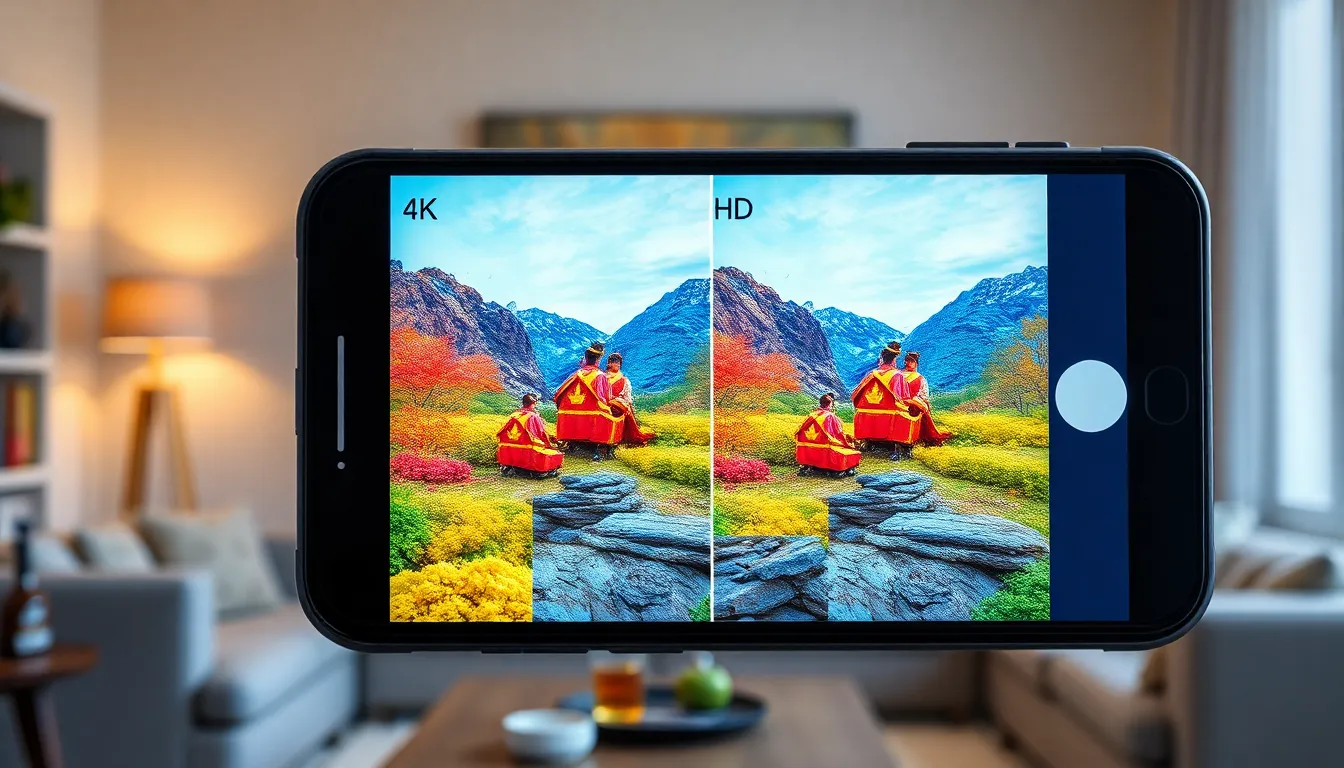
When evaluating video quality on iPhones, clarity and detail become essential factors.
Clarity and Detail in 4K
4K content boasts a resolution of 3,840 x 2,160 pixels. This high pixel count delivers unmatched sharpness and intricate detail. Many users appreciate the immersive experience that 4K provides, especially on larger displays. Filmmakers and content creators often prefer 4K because it enhances the viewer’s ability to see fine textures and colors. Additionally, this resolution maintains clarity even at close viewing distances, making it ideal for dynamic scenes. Storage requirements can increase significantly when opting for 4K, so users must consider their device’s capacity. Processing power also becomes a factor since 4K playback demands more resources than lower resolutions.
Clarity and Detail in HD
HD content operates at a resolution of 1,920 x 1,080 pixels. While this resolution may not match 4K’s detail, it still offers a satisfactory viewing experience on smaller screens. Many users value HD for its wide availability and lower data requirements. Clarity remains strong on standard displays, making it suitable for everyday viewing. Accessibility becomes a significant advantage, especially with most streaming platforms primarily offering HD content. The balance between quality and file management makes HD appealing for users concerned about storage space. Overall, HD continues to provide a reliable option for iPhone users seeking a clear performance without the extra demands of 4K.
Performance on iPhone
Video quality on an iPhone influences overall performance in various ways. Both 4K and HD resolutions offer unique advantages suited to different user needs.
Impact on Battery Life
Battery life diminishes when using 4K video. A significant amount of energy is required for higher resolutions, causing quicker depletion during playback. Watching HD content consumes less power, allowing longer viewing sessions. Many users appreciate video quality that doesn’t heavily tax their device’s battery. Additionally, extended exposure to 4K can lead to excessive heat generation, further impacting battery health. Balancing video quality and battery conservation becomes crucial for smooth user experiences on iPhones.
Storage Considerations
Storage space is limited on many iPhones, making it a critical factor in video selection. High-resolution 4K videos occupy significantly more storage than HD files. For example, a minute of 4K video may require about 375 MB, while HD consumes approximately 130 MB. Users often prefer the manageable file sizes of HD, especially those who frequently capture videos. Cloud storage solutions offer alternatives but may come with additional costs and management tasks. Overall, choosing between 4K and HD affects not just viewing quality, but also storage efficiency on iPhones.
User Experience
Video quality significantly impacts user experience on iPhones. Users often assess streaming options based on clarity and accessibility, with preferences leaning towards 4K or HD.
Streaming and Playback
Streaming content in 4K enhances visual fidelity, presenting vibrant colors and sharp detail. Many streaming platforms, however, primarily offer HD options, focusing on ease of access for diverse user needs. Users often enjoy extended playback periods with HD videos, as they consume less battery power. The convenience of HD streaming allows for seamless viewing without worrying about quick battery depletion. Given that most users prioritize manageable file sizes, HD remains a popular choice for everyday viewing.
Editing Capabilities
Editing videos in 4K elevates the experience with superior detail, enabling precise adjustments. Creators appreciate the clarity that comes with 4K, which highlights fine textures and colors. Nonetheless, working with HD videos still offers impressive outcomes, making the editing process efficient for various projects. HD files take up less storage, allowing users to manage multiple projects without running into space issues. With editing software supporting both resolutions, creators can confidently choose their desired quality according to project needs.
Choosing between 4K and HD on an iPhone ultimately depends on individual needs and preferences. For those who prioritize visual quality and detail 4K stands out as the superior option. It’s perfect for filmmakers and content creators who want to capture every nuance in their work.
On the other hand HD offers a practical solution for everyday users who value storage efficiency and battery life. Its clear viewing experience is sufficient for most casual content consumption.
Ultimately users should weigh the benefits of enhanced quality against the demands of storage and power consumption to make the best choice for their iPhone experience.