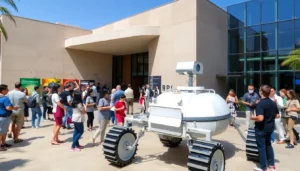
Space isn’t just the final frontier anymore; it’s the new playground for tech enthusiasts and dreamers alike. With advancements in new space technology, the cosmos is becoming more accessible than ever. Gone are the days when space travel was reserved for astronauts and billionaires. Now, with a sprinkle of innovation and a dash of imagination, even your neighbor might be planning a weekend getaway to Mars.
Overview of New Space Technology
New space technology encompasses various innovations that enhance exploration and accessibility. Companies like SpaceX and Blue Origin lead the charge with reusable rockets, significantly reducing launch costs. Reusable boosters can save millions of dollars per flight, creating a more sustainable model for orbital travel.
Satellite technology has also advanced, with small satellites or CubeSats enabling a flurry of research opportunities. These miniaturized satellites provide data for climate monitoring and Earth observation. Enhanced imaging technology allows for clearer pictures of Earth, supporting environmental efforts and humanitarian projects.
Another promising area involves propulsion systems. Ion propulsion and other advanced concepts offer greater efficiency for long-duration missions. Innovative systems can operate for extended periods, enabling deeper space exploration.
Artificial intelligence plays a vital role in new space technology. Autonomous systems assist in mission planning and hazard detection, enhancing safety and efficiency. Robotics also factor into this, with advanced rovers and drones being developed for surface exploration on planets like Mars and moons like Europa.
Collaboration across nations and private sectors has accelerated advancements. Initiatives like NASA’s Artemis program bring together various stakeholders to return humans to the Moon, fostering innovation. Partnerships encourage the sharing of knowledge and resources, pushing the boundaries of what’s possible.
Finally, space tourism is emerging as a viable industry. Companies are developing spacecraft that can take civilians on suborbital flights, making space more accessible. The potential market attracts investors, indicating a significant shift in public access to space travel.
Recent Advancements

New advancements in space technology continue to reshape exploration and accessibility. These innovations pave the way for more ambitious missions and increased participation from private sectors.
Satellite Technology
Significant progress occurs in satellite technology, particularly with the development of CubeSats. These small, cost-effective satellites enhance climate monitoring and Earth observation capabilities. They enable researchers to gather valuable data on weather patterns, natural disasters, and environmental changes. Numerous organizations leverage CubeSats for innovative research, contributing to an improved understanding of the planet. Enhanced sensor technologies within these satellites also provide greater accuracy in data collection.
Propulsion Systems
Efficiency defines the latest advancements in propulsion systems. Companies explore ion propulsion and electric propulsion technologies for deeper space missions. These systems use less fuel than traditional rocket engines, allowing for longer mission durations. Spacecraft equipped with advanced propulsion systems can substantially decrease travel time to distant planets. Innovative designs continue to improve maneuverability, enabling spacecraft to navigate complex trajectories with ease.
Communication Innovations
Communication technologies undergo rapid advancements, ensuring seamless data transmission across vast distances. New systems incorporate high-frequency radio waves and laser communications to boost bandwidth and reduce latency. These innovations facilitate real-time communication with spacecraft, enhancing mission control and support. Furthermore, improved data relay systems assist in transmitting information from remote satellites to Earth. Enhanced communication capabilities foster collaboration among international space agencies, streamlining mission coordination.
Impact on Space Exploration
Advancements in space technology significantly enhance exploration efforts. Innovations in propulsion systems expedite travel to Mars and other destinations.
Mars Missions
Mars missions benefit from improved ion and electric propulsion technologies. These systems decrease travel time, making prolonged missions more feasible. SpaceX’s Starship aims to carry humans to the Martian surface, driving further research and robotic missions. The Mars rover Perseverance employs advanced AI to analyze samples, providing vital data on the planet’s geology. Collaborative efforts among various space agencies push the boundaries of what can be achieved, solidifying humanity’s presence on Mars.
Lunar Exploration
Lunar exploration gains momentum with enhanced communication and satellite systems. The Artemis program exemplifies international collaboration, reviving interest in the Moon as a target for scientific research. New rover designs facilitate surface exploration, gathering data crucial for future colonization. Innovations in landing technology ensure safer missions to the lunar surface. Additionally, research into lunar resources opens opportunities for sustainable human presence, making lunar outposts a possible reality.
Challenges and Opportunities
Significant challenges accompany new space technology, but opportunities also emerge.
Economic Factors
Investment plays a crucial role in the growth of the space industry. Startups and established companies alike vie for funding to innovate. High development costs often hinder small firms from entering the market. SpaceX and Blue Origin exemplify how successful funding can lead to groundbreaking advancements. Launch costs have dramatically decreased due to reusable rocket technology, attracting more players. Competitive pricing enables a broader range of missions, increasing overall activity in space. Global satellite deployments have surged, driven by demand for data acquisition. As various industries see value in space-related data, economic incentives will likely bolster investment further.
Regulatory Issues
Navigating regulations poses challenges for emerging space ventures. Clarity and responsiveness of regulations often determine the speed of innovation. National and international guidelines evolve to address new technologies and safety concerns. Companies must align their operations with both national policies and orbital traffic management. Coordination among nations enhances the establishment of standardized policies. Collaboration with regulatory bodies is vital for entrepreneurs to facilitate compliance. Overlapping jurisdictions complicate licenses and permits, often causing delays. Streamlined processes could encourage exploration and commercial activity, fostering a more vibrant space economy.
Future Trends in New Space Technology
Emerging technologies shape the future of space exploration. Significant developments include advancements in reusable rocket technology. Companies like SpaceX and Blue Origin continue to lead with innovations that drastically cut launch costs. Sustainable space travel options are now more viable for both commercial and scientific missions.
Artificial intelligence plays a pivotal role in future missions. Autonomous systems improve efficiency in mission planning and ensure safety during operations. Robotics, including advanced rovers and drones, are being developed for exploration on planetary surfaces. These technologies facilitate more comprehensive data collection and analysis.
Propulsion systems are evolving rapidly. Electric and ion propulsion technologies increase efficiency for long-duration missions. Such systems consume less fuel than traditional engines, paving the way for quicker travel times and complex trajectory navigation.
Satellite technology also sees substantial improvements. Smaller satellites and CubeSats enable extensive research opportunities, enhancing climate monitoring and Earth observation capabilities. These innovations contribute significantly to environmental understanding and disaster response.
Communication technologies are advancing as well. High-frequency radio wave systems and laser communication provide faster data transmission, enhancing real-time connectivity with spacecraft. Improved bandwidth and reduced latency support mission coordination for international space agencies.
Collaboration stands at the forefront of new developments. Partnerships among nations and private sectors foster innovation, exemplified by NASA’s Artemis program. This initiative highlights a collective effort toward lunar exploration and research.
As space tourism gains traction, companies work diligently to develop suborbital flights for civilians. This movement represents a paradigm shift in public access to space travel, aligning with broader trends in the industry.
The advancements in space technology are reshaping humanity’s relationship with the cosmos. With innovative companies leading the charge and international collaboration becoming the norm, the future of space exploration looks promising.
As barriers to entry lower and sustainable practices take hold, more individuals will have the chance to experience the wonders of space. The potential for scientific discoveries and the emergence of new industries like space tourism signify a transformative era.
Navigating the challenges ahead will require continued investment and regulatory support. However, the collective efforts of nations and private sectors are paving the way for a new chapter in space exploration, one that invites everyone to dream big and reach for the stars.